
You cleaned up your diet months ago. More vegetables at dinner, a smoothie some mornings, the switch from white bread to "seedy" loaves. And still, something feels off — energy that dips in the afternoon, a stomach that never quite settles, cravings that show up two hours after a meal you were sure would hold you. You've been told to eat "healthy," but the one number that quietly ties all of this together rarely gets mentioned by name.
That number is fiber. Not a trendy supplement, not a superfood powder — just the part of plants your body can't digest. It turns out most of us eat roughly half of what we need, and closing that gap does more for everyday health than almost any other single change you can make to your plate.
Fiber is the closest thing nutrition has to a free lunch: it costs nothing extra, it's already in ordinary food, and almost nobody gets enough of it.
The gap nobody mentions
Here's the uncomfortable math. U.S. dietary guidelines suggest adults aim for roughly 25 grams of fiber a day for women and 38 grams for men — or about 14 grams for every 1,000 calories you eat. The average American manages around 16 grams a day, and by some estimates only about 5% of adults actually hit the target. That's not a rounding error. That's most of the population living on half rations of something their gut genuinely depends on.
Why the shortfall? Because fiber lives in the foods modern eating quietly strips out. Refining wheat into white flour removes the bran. Juicing an orange throws away the pulp. A "vegetable" that's mostly potato starch or a smoothie that's mostly banana and yogurt can look healthy while delivering surprisingly little of it. The gap isn't usually a willpower problem — it's that the fiber got processed out before the food reached you.
The practical takeaway is that you almost certainly have room to add fiber, no matter how clean you think your diet is. The question is less "should I eat more?" and more "where is mine going missing?"
Two kinds of fiber, two different jobs
Fiber isn't one substance. It splits into two broad types, and knowing the difference explains a lot of the confusing advice you've heard.
Soluble fiber dissolves in water and forms a gel. That gel is why oatmeal turns thick and why chia seeds swell in liquid. In your gut, that same gel slows digestion, which blunts blood-sugar spikes and helps sweep out some of the cholesterol your body would otherwise reabsorb. You find it in oats, beans, lentils, apples, citrus, and barley.
Insoluble fiber doesn't dissolve. It's the structural, scratchy part of plants — the skin of a bean, the bran on whole wheat, the strings in celery. Its job is bulk and movement: it adds weight to stool and keeps things traveling through the digestive tract on schedule. Whole grains, nuts, and the peels of fruits and vegetables are the main sources.
Most whole plant foods carry both, in different ratios, which is why "eat a variety of plants" beats obsessing over any single one. You don't need to track soluble versus insoluble on a spreadsheet. You need enough total fiber from enough different sources that both jobs get done.
What actually changes when you hit the target
The reason doctors keep circling back to fiber is that the benefits aren't narrow. Soluble fiber's gel-forming trick measurably lowers LDL cholesterol and softens post-meal blood-sugar spikes — two of the biggest levers in heart and metabolic health. Population studies tie higher fiber intake to lower rates of cardiovascular disease, type 2 diabetes, and colorectal cancer. These aren't fringe claims; they're some of the most consistent findings in nutrition research.
Then there's the gut itself. The fiber you can't digest becomes food for the bacteria living in your colon. When those microbes ferment it, they produce short-chain fatty acids that nourish the cells lining your intestine and help keep inflammation in check. In plain terms: you're not just feeding yourself when you eat fiber — you're feeding an ecosystem that feeds you back. A well-fed microbiome is linked to steadier digestion, better immune signaling, and even mood regulation through the gut-brain connection.
The everyday effects are the ones you'll actually notice first, though. Fiber slows how fast your stomach empties, so a fiber-rich meal keeps you full longer and flattens the afternoon crash. That's why a bowl of oatmeal holds you until lunch while a bagel leaves you hungry by ten. If you've been fighting cravings, adding fiber often does quietly what willpower couldn't.
How to close the gap without overhauling your life
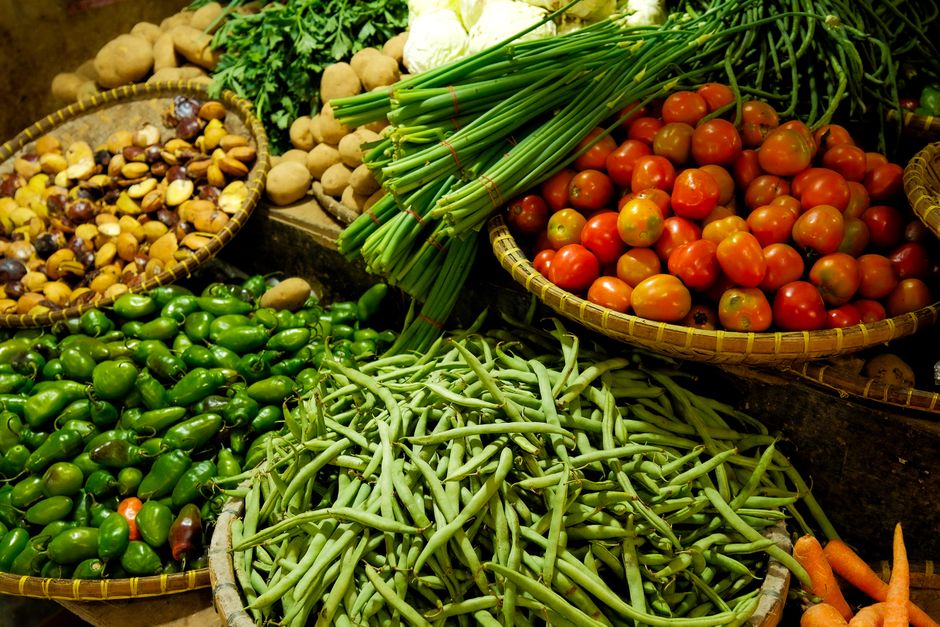
The good news is that fiber is cheap and everywhere once you know where to look. You don't need a special aisle at the store. A cup of cooked lentils delivers around 15 grams — nearly a day's worth for many people. A cup of raspberries brings about 8. A medium avocado, roughly 10. Chickpeas, black beans, oats, chia, whole grains, and the humble skin-on apple are all doing heavy lifting.
A simple way to think about it, without weighing anything:
| Habit | Rough fiber gain |
|---|---|
| Swap white rice/bread for the whole-grain version | +3–5 g per meal |
| Add a half-cup of beans or lentils to one meal | +7–8 g |
| Keep the peel on apples, pears, potatoes | +2–3 g each |
| A handful of nuts or a tablespoon of chia | +3–5 g |
| A serving of berries instead of juice | +6–8 g |
Stack two or three of those and you've closed most of the average person's gap in a single day.
Two cautions worth respecting. First, ramp up gradually. Going from 16 to 35 grams overnight is a reliable recipe for bloating and gas, because your gut bacteria need time to adjust. Add a few grams every few days instead. Second, drink more water as you do it — fiber, especially the insoluble kind, needs fluid to move smoothly, and a sudden fiber jump without extra water can actually back you up rather than help.
Whole food first, powders second
You've probably seen fiber gummies, powders, and "prebiotic" sodas marketing themselves as an easy fix. They're not useless, and for someone genuinely struggling to eat enough plants, a supplement like psyllium can help — it's mostly soluble fiber and has real evidence behind its cholesterol and regularity benefits.
But a scoop of isolated fiber isn't the same as a bowl of lentils. Whole foods bring fiber packaged with vitamins, minerals, antioxidants, and that mix of soluble and insoluble types your microbiome thrives on. A powder gives you one narrow slice of that. Treat supplements as a patch for a stubborn gap, not as permission to keep eating the refined stuff. As with most things in nutrition, the boring answer — real plants, in variety — is the one that keeps winning.
If you have a digestive condition, take medication, or have specific concerns, it's worth running big diet changes past a doctor or dietitian; fiber interacts with how some drugs are absorbed and isn't one-size-fits-all.
The takeaway
Fiber is the rare health lever that's cheap, evidence-backed, and almost universally under-pulled. Most of us eat around 16 grams a day when we need closer to 25 or 38, and that gap quietly touches everything from afternoon energy to long-term heart and gut health. You don't need a cleanse or a cabinet of supplements — you need whole grains instead of refined ones, a scoop of beans in more meals, the peel left on, and a little patience while your gut adjusts.
Start with one swap this week and let it stick before adding the next. Your future self — steadier, fuller, and quietly better-fueled — will barely remember the version of you that ran on half.



Comments 0