
You are standing in the grocery aisle holding two yogurts. One shouts "20g PROTEIN" in bold letters. The other is cheaper and tastes better, but stays quiet about its numbers. A few years ago you would have grabbed the tasty one without a second thought. Now you hesitate, because somewhere along the way protein became the nutrient everyone worries about — and you are not entirely sure how much you are supposed to be getting.
If that scene feels familiar, you are not alone. Protein has gone from a bodybuilder's obsession to a mainstream anxiety, plastered on pancake mix, coffee creamer, and even bottled water. The marketing has raced ahead of most people's understanding. So let's slow down and answer the real question underneath all that packaging: how much protein does a normal person actually need, and how do you get it without turning every meal into a math problem?
The number everyone quotes — and why it's misleading
The figure you will see most often is the RDA (Recommended Dietary Allowance): 0.8 grams of protein per kilogram of body weight per day. For a 70 kg (about 154 lb) adult, that works out to roughly 56 grams a day. It sounds authoritative, and it is — but for a narrower purpose than most people assume.
The RDA was set as a minimum to prevent deficiency, not as a target for thriving. Think of it as the amount that keeps a healthy young adult from losing muscle and running into problems — the nutritional equivalent of "not failing," rather than "doing well." It was also calibrated largely on younger adults, which matters enormously once you understand what happens to muscle over time.
The RDA answers "how little can I get away with?" Most people are actually asking "how much helps me stay strong?" — and those are two very different questions.
That gap is why nutrition researchers and the newer guidance have drifted upward. Recent recommendations, including the direction of the latest U.S. Dietary Guidelines discussions, point toward roughly 1.2 to 1.6 g/kg per day for many adults, with active people and older adults often landing at the higher end. For our 70 kg example, that is closer to 85-110 grams a day, not 56.
Why the right number rises as you age
Here is the fact that reframes the whole conversation: adults can lose up to about 8% of their muscle mass per decade after age 30, and the rate tends to accelerate later in life. This gradual erosion, called sarcopenia, is a major reason older people lose strength, balance, and independence. Protein is one of the few levers you can pull against it.
The problem is that aging bodies become less efficient at turning dietary protein into muscle — a phenomenon called anabolic resistance. An older adult essentially needs a bigger "dose" of protein to get the same muscle-building signal a younger person gets from a smaller amount. This is why experts studying protein and aging frequently recommend 1.2 to 2.0 g/kg per day for older adults, well above the old RDA.
Consider two people, both 70 kg. A sedentary 25-year-old might do perfectly fine around 1.0-1.2 g/kg (70-85 g/day). A 68-year-old trying to preserve strength and stay off a future walker is better served aiming for 1.2-1.6 g/kg (85-110 g/day), paired with some resistance exercise. Same body weight, meaningfully different targets — because the goal is not survival, it's staying capable.
A quick way to find your own number
You don't need an app or a spreadsheet. Here is a rough decision guide based on your situation:
| Situation | Target (g/kg/day) | Example for 70 kg |
|---|---|---|
| Sedentary, healthy adult | 1.0-1.2 | 70-85 g |
| Regularly active / general fitness | 1.2-1.6 | 85-110 g |
| Lifting weights or endurance training | 1.5-1.7 | 105-120 g |
| Older adult (50+) preserving muscle | 1.2-2.0 | 85-140 g |
To use it: take your weight in kilograms (pounds / 2.2), pick the row that fits your life, and multiply. If you weigh 80 kg and you're an active 45-year-old, 1.4 x 80 is about 112 grams a day. That's your ballpark — not a rule carved in stone, just a target to steer toward.
One caveat worth stating plainly: people with kidney disease or certain medical conditions may need to limit protein, and should follow their doctor's advice rather than general guidance. This article is informational, not a substitute for a professional who knows your health history.
Timing matters more than the internet says — and less
You may have heard about the "anabolic window," the idea that you must slam a protein shake within minutes of exercising or your workout is wasted. The honest answer: total daily protein matters far more than precise timing. Hitting your daily target consistently beats obsessing over the clock.
That said, distribution does help. Your body can only use so much protein for muscle building in one sitting — roughly 20 to 40 grams per meal for most people. Eating 100 grams of protein spread across breakfast, lunch, and dinner sends a muscle-building signal three times a day. Eating that same 100 grams almost entirely at dinner — the classic "coffee for breakfast, salad for lunch, huge dinner" pattern — wastes some of the potential.
Spreading protein across meals is like watering a plant a little each day instead of drowning it once a week. The plant can only absorb so much at a time.
The practical takeaway is simple: aim for a solid protein source at each meal rather than backloading it all into the evening. This is especially important for older adults, whose higher per-dose needs make an under-proteined breakfast a real missed opportunity.
Where to actually get it (without living on chicken breast)
Protein quality varies, and animal sources — eggs, dairy, fish, poultry, meat — deliver all the essential amino acids in easily usable form. But you have far more options than plain grilled chicken. Here are approximate protein amounts to calibrate your eye:
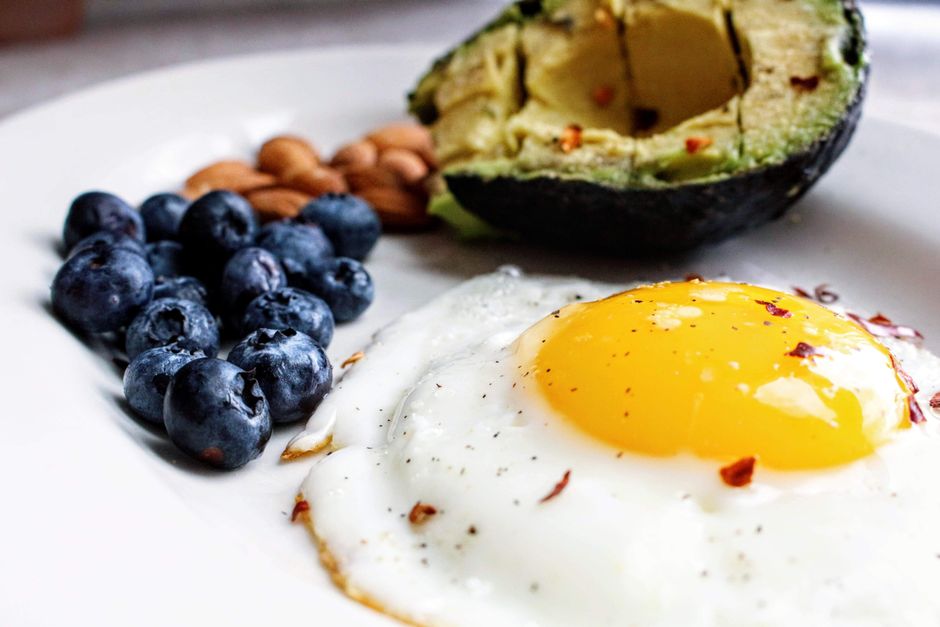
- Two large eggs: ~12 g
- Greek yogurt (1 cup): ~17-20 g
- Chicken breast (100 g cooked): ~31 g
- Canned tuna (1 can): ~25 g
- Lentils (1 cup cooked): ~18 g
- Tofu (100 g): ~8-10 g
- Cottage cheese (1 cup): ~24 g
Plant eaters can absolutely hit their targets, but should eat a variety of sources — beans, lentils, tofu, tempeh, whole grains, nuts — because most individual plant foods are lower in one or more essential amino acids. Combining them across the day covers the gaps naturally; you don't need to engineer each plate.
And protein powder? It's a convenient tool, not a requirement. A scoop of whey or a plant blend is a fast 20-25 grams when whole food isn't practical — a busy morning, right after the gym, a travel day. But there's nothing magic in the tub that you can't get from an extra egg, a cup of yogurt, or a can of tuna. Use it to fill gaps, not to replace meals.
Putting it together
Protein is genuinely important, and for many people — especially those over 50 or those who exercise — the old 0.8 g/kg minimum sells them short. But the answer isn't to panic-buy every product with a number on the label. It's to pick a sensible target (somewhere around 1.2-1.6 g/kg for most active adults), spread that protein across your meals, and lean on ordinary whole foods to get there.
Do that, and the grocery-aisle hesitation disappears. You'll know roughly what you need, you'll know that a plain yogurt and two eggs at breakfast already put a real dent in it, and you can buy the tastier option knowing you'll make up the difference over the rest of the day. Eat well, move a little, and let the marketing shout without you — your body was going to do the quiet, steady work regardless.

Comments 0