
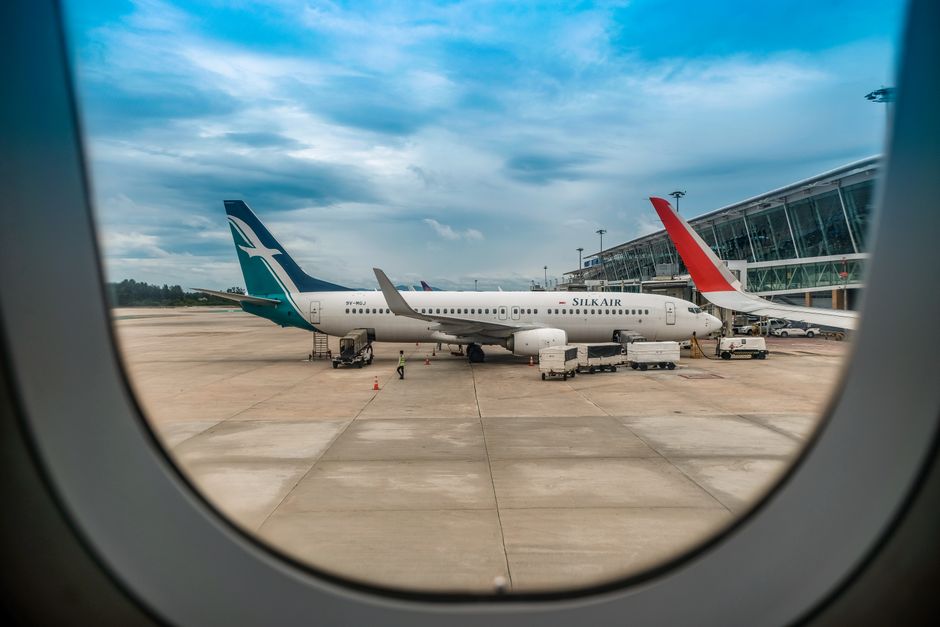
You're on the aisle, somewhere over the middle of the country, and the person beside you mentions what they paid. It's less than half your fare. Same plane, same route, same day. They didn't have a corporate discount or a cousin at the airline. They just booked differently.
That conversation happens on almost every flight, and it stings because it feels arbitrary. It isn't. Airfare pricing is strange, but it isn't random, and the handful of things that actually move the number are learnable in an afternoon. The trouble is that the internet buried those few real levers under a mountain of folklore — clear your cookies, book on a Tuesday, use a VPN and pretend you live in Bulgaria. Most of that is noise. Some of it wastes real money.
Here's what holds up.
The price you see isn't personal
Start by letting go of the biggest myth: airlines are not watching your search history and quietly raising the fare because you looked twice.
Consumer Reports ran 372 paired searches on this in 2016, comparing a normal browser against an incognito window. The incognito session was cheaper about 7% of the time — and more expensive about 5% of the time. In 88% of cases the price was identical. A 2024 look by Quartz reached the same conclusion. The pattern is noise, not surveillance.
Fares move because inventory moves — not because you refreshed the page.
What actually changes the number is fare class inventory. An airline splits a cabin into buckets, each with its own price. When the cheapest bucket sells out, the next one becomes the price you see. That's why a fare can jump $90 overnight and then drop again when the airline reopens seats or a competitor undercuts the route. You watching it has nothing to do with it.
This matters practically, because every minute you spend clearing cookies is a minute not spent on the things that do work. Search normally. Search from your phone if it's convenient. Then move on to the levers with actual leverage.
Book early enough, but not absurdly early
Most airlines open their schedules roughly 11 months out — around 330 days for the big US carriers, shorter for budget lines like Allegiant and Southwest. That does not mean day 330 is the bargain.
Booking at the very edge of the window usually means paying a placeholder price the airline set before it had any demand data. Booking the week of departure means paying whatever's left. The sweet spot sits in the middle, and it differs by trip type. Recent 2026 guidance clusters around one to three months ahead for domestic and a wider two to eight months for international, with domestic averages bottoming out near the 30-day mark on many routes.
| Trip type | Rough booking window | Why |
|---|---|---|
| Domestic | ~1–3 months out | Airlines have real demand data; cheap buckets still open |
| International | ~2–8 months out | Fewer seats, longer sell cycle, bigger swings |
| Peak holidays | Earlier than you think | Cheap buckets vanish first on high-demand dates |
| Award tickets (points) | As soon as seats appear | Award inventory is scarce, not price-driven |
Treat those as ranges, not rules. A Tuesday in February to a mid-size city behaves nothing like Thanksgiving week to a beach. The useful takeaway is directional: if your trip is four months out, you have time. If it's four days out, stop optimizing and just buy.
One more piece of folklore worth retiring — the "book on Tuesday at 1 p.m." trick. Booking day barely matters now. Flying day still does. Expedia's 2026 Air Hacks report puts the savings from swapping a Sunday departure for a Friday at up to 8%, and midweek departures — Tuesday, Wednesday, Saturday — tend to price lower than the Sunday-evening crush of returning weekend travelers.
Flexibility is the single biggest lever
If you can only take one thing from this piece: the dates you're willing to fly matter more than every booking trick combined.
Open Google Flights and use the date grid. It lays out fares across a spread of departure and return dates at once, so you can see instantly that leaving Thursday instead of Friday and returning Monday instead of Sunday drops the total by $160. The price graph does the same across roughly two months, which is how you spot that late September is quietly $200 cheaper than early September for no reason you'd guess.
Then widen the map. The "nearby airports" toggle is doing more work than people realize — a metro area with two or three airports often has a spread of $100+ on identical dates, and a 40-minute train ride to the cheaper one is a good trade for a lot of travelers. Just do the honest math: if the savings evaporate into a $70 rideshare and an extra hotel night, it wasn't a savings.
There's a real ceiling here, and it's worth naming. If your kid's school break is fixed and your leave is approved for exact dates, flexibility isn't available to you. That's fine. It just means the other tactics carry more weight, and you should lean harder on booking early rather than hunting for a window that doesn't exist.
Let the search do the waiting for you
Nobody should be manually checking a fare every morning for six weeks. That's what alerts are for.
Set price tracking on your route in Google Flights and let it email you. Tracking specific dates tells you when that itinerary moves; tracking "any dates" tells you when the route's minimum drops meaningfully over the coming month, which is more useful than it sounds if your plans are loose. Kayak and most major search sites offer the same thing. Set it once, forget it, and let the notification arrive while you're doing something else.
Google Flights also flags a price guarantee on some itineraries — if the fare drops after you book, it refunds the difference, capped at $500 a year. As of writing it only appears on flights departing the US and shows up most often on a handful of carriers, so treat it as a nice bonus when you see the badge rather than something to plan around.
The mental shift here is the point. Fare hunting feels like a skill you perform. It's better run as a system you set up once and check when it pings you.
Your free undo button
This one is underused, and it changes how you should feel about pulling the trigger.
Under the US Department of Transportation's rule (14 CFR 259.5), airlines flying to, from, or within the United States must let you cancel for a full refund within 24 hours of purchase — or hold the quoted price for 24 hours without paying. It applies when you book at least seven days before departure.
The clock is exact. Buy at 2:47 p.m. Tuesday and your window closes at 2:47 p.m. Wednesday, not at midnight, not at the end of business.
Two caveats keep people from collecting on it. First, tickets bought through third-party sites generally aren't covered by the rule — the agency sets its own policy, which may be worse. Second, airlines have been trimming the edges: effective 29 July 2026, American limited its free 24-hour cancellation to bookings made at least a week out, tightening what used to be more generous. Check the specific carrier's terms rather than assuming.
Used well, this is permission to stop agonizing. See a fare that looks good? Book it, then spend the evening confirming nothing better exists. If something does, cancel and rebook.
The "hacks" worth skipping
Not every clever-sounding tactic survives contact with the fine print.
Hidden-city ticketing — booking A-to-C and walking out at the B layover because it's cheaper than A-to-B — is real, and airlines actively dislike it. You can't check a bag, it collapses the moment your flight gets rerouted, and carriers have canceled return legs and closed frequent-flyer accounts over repeat use. It's a stunt, not a strategy.
Basic economy deserves a calculator, not a reflex. The headline fare is lower, but once you add a carry-on fee, seat selection, and the inability to change anything, a "cheap" ticket routinely lands above the standard fare it undercut. Price the trip you'll actually take, bags and all, then compare.
Third-party bargain sites can genuinely be cheaper, but you're trading away the direct relationship with the airline. When a flight cancels at 11 p.m., the traveler holding a direct booking gets rebooked; the one who bought through a discount aggregator is often on hold with a call center. On a low-stakes domestic hop, fine. On the connection that has to work, the $30 you save is cheap insurance you just declined to buy.
A routine that actually works
Strip it all down and it's five steps.
- Decide the trip roughly, then start looking one to three months out for domestic, two to eight for international.
- Open the date grid and the price graph first. Find out what your flexibility is worth before you commit to dates.
- Check nearby airports, then subtract the real cost of getting to them.
- Set a price alert and stop looking. Let the email come to you.
- When something good appears, book it — and use the 24-hour window to double-check rather than to hesitate.
That's the whole method. No incognito windows, no VPN theater, no waiting for a magic Tuesday.
The traveler in the next seat who paid half what you did probably wasn't smarter. They were just flexible on a Thursday and had an alert set. Both of those are available to you on the next trip — and the nicest part is that once the system is running, cheap flights mostly find you.
Prices, policies, and airline rules described here are as of writing and change often. Confirm the current terms with the airline before you book.



Comments 0