

You made a smoothie for breakfast, grabbed a salad at lunch, and told yourself it was a healthy day. But by mid-afternoon you were foraging in the snack drawer, and by evening you were somehow starving again. If that sounds familiar, the missing piece often isn't willpower or calories. It's protein -- and specifically, how little of it many otherwise careful eaters actually get.
Protein is having a moment. It's stamped on cereal boxes, blended into coffee, and sold by the scoop. Some of that hype oversells it. But the underlying point is real: protein is the one macronutrient most people underestimate, and getting it right quietly improves how full you feel, how you recover from exercise, and how well you hold onto muscle as you age. The tricky part is that "how much do I need" has a more interesting answer than the single number on the back of a label.
Most people don't have a protein emergency. They have a protein distribution problem -- plenty at dinner, almost none until then.
The number everyone quotes -- and why it's a floor, not a target
The figure you'll see most often is 0.8 grams of protein per kilogram of body weight per day. That's the official Recommended Dietary Allowance for adults, and it's where a lot of confusion starts. The RDA isn't the amount that makes you thrive. It's the amount set to prevent deficiency in almost everyone -- a floor designed so that a healthy sedentary adult won't lose muscle or run into a shortfall.
For a 70 kg (about 154 lb) adult, 0.8 g/kg works out to roughly 56 grams a day. That's genuinely not much: two eggs, a cup of yogurt, and a single chicken breast would clear it. The problem is that "not becoming deficient" and "feeling and functioning well" are different goals. Think of the RDA the way you'd think of the minimum oil level in a car -- above the line means you won't seize up, not that everything is running at its best.
Once you understand it as a floor, the range that active researchers and dietitians actually recommend makes more sense. For adults who exercise, want to manage their weight, or simply want to feel fuller through the day, something closer to 1.2 to 1.6 g/kg is a more useful target. For our 70 kg example, that's roughly 85 to 110 grams a day -- a meaningful jump that changes how you plan meals rather than a rounding error you can hit by accident.
Why more protein helps (when it does)
The most immediate payoff most people notice is fullness. Gram for gram, protein is the most satiating macronutrient -- it triggers stronger signals of "I've eaten enough" than the same calories from carbohydrate or fat. This is why a breakfast of eggs and Greek yogurt keeps the snack drawer closed longer than a bagel or a fruit smoothie, even when the calorie counts are similar. If you constantly feel hungry an hour after eating, low protein is one of the first things worth checking.
The second reason is muscle -- and not just for gym-goers. Your body is constantly breaking down and rebuilding muscle tissue, and protein supplies the raw material. If you strength-train, adequate protein is what lets the training actually translate into results; without it, you're doing the work and skipping the recovery. Even if you never touch a weight, protein helps you preserve the muscle you already have, which matters enormously for staying strong, stable, and independent later in life.
That last point deserves emphasis, because the needs genuinely shift with age. Starting in your 50s and 60s, the body becomes less efficient at using dietary protein, and age-related muscle loss (called sarcopenia) speeds up. Research on older adults consistently lands higher than the general RDA -- often in the range of 1.0 to 1.2 g/kg, and higher still (around 1.2 to 1.5 g/kg) for those managing illness or recovery. In other words, the people most likely to under-eat protein are often the ones who need more of it.
Timing matters more than you'd think
Here's the detail that surprises people: it's not only how much protein you eat, but when. The typical Western eating pattern is badly lopsided -- a carb-heavy breakfast, a light lunch, and then a large protein dinner. You might hit your daily total, but you've delivered almost all of it in one evening dose.
Your body can only use so much protein at once to build and repair muscle. Studies point to a per-meal "anabolic threshold" of roughly 25 to 30 grams of protein to maximally stimulate muscle protein synthesis in a single sitting -- and that threshold appears to be higher in older adults, not lower. Front-load nothing and back-load everything, and you spend most of the day below that threshold, then overshoot it at dinner where the surplus doesn't do much extra good.
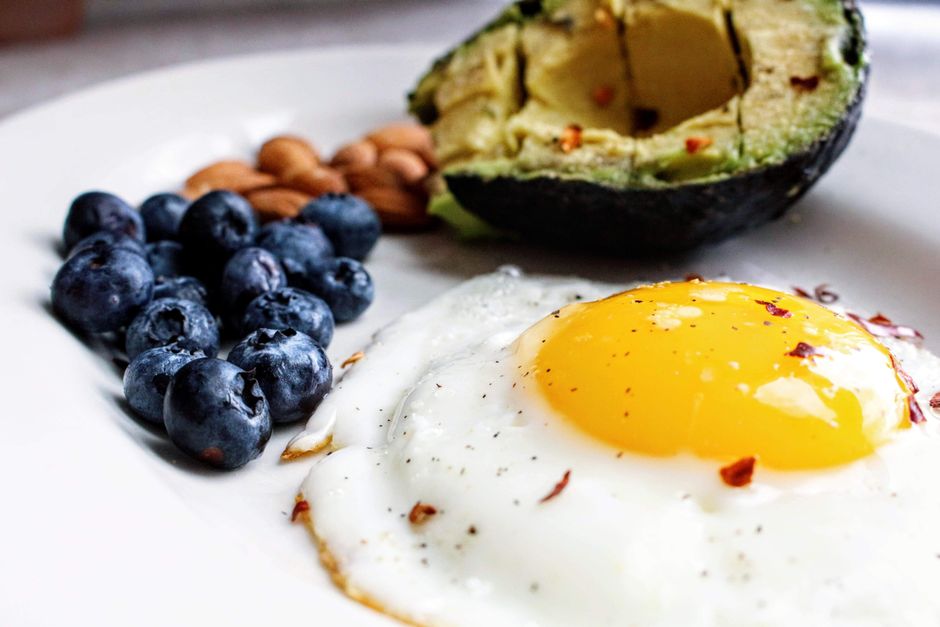
The fix is simple and doesn't require eating more overall: spread protein across your meals. Aim for a solid 25 to 30 grams at breakfast, lunch, and dinner rather than 5 grams, 15 grams, and 60 grams. For many people, breakfast is the weak link -- that's where a couple of eggs, a scoop of yogurt, cottage cheese, or a protein shake changes the whole day's math.
| Food (typical serving) | Approx. protein |
|---|---|
| 1 large egg | 6 g |
| Greek yogurt (170 g cup) | 15-17 g |
| Cooked chicken breast (100 g) | 30 g |
| Canned tuna (1 can) | 20 g |
| Lentils, cooked (1 cup) | 18 g |
| Tofu, firm (100 g) | 12 g |
| Cottage cheese (1 cup) | 25 g |
Values are approximate and vary by brand and preparation -- use them for planning, not precision.
A simple way to estimate your own number
You don't need an app or a food scale to get in the right zone. Start with your body weight in kilograms (pounds divided by 2.2). Then pick a multiplier based on your situation:
- Mostly sedentary, general health: around 1.0 g/kg
- Active, exercising, or managing weight: 1.2 to 1.6 g/kg
- Older adult (50+) preserving muscle: 1.0 to 1.2 g/kg, leaning higher if recovering from illness
So a moderately active 80 kg person lands somewhere between 96 and 128 grams a day. Rather than obsessing over the exact figure, divide it into three meals and check whether each one clears the 25-30 gram bar. If your breakfast is currently a piece of toast, you've just found your easiest win.
One practical note: hitting these numbers is easier with whole foods than most people assume, and you rarely need powders to get there. Protein supplements are a convenience, not a requirement -- useful when you're busy or traveling, unnecessary if your meals already stack up. Spend on real food first; treat the shaker bottle as a backup.
Who should be more careful
Protein is safe and beneficial for the vast majority of healthy people, and the old worry that higher intakes "damage healthy kidneys" hasn't held up for people with normal kidney function. But there's a real exception worth naming: individuals with significant kidney disease may need to limit protein, and should follow guidance from their own doctor rather than general advice like this. The same caution applies to anyone with a medical condition or on a specialized diet.
That's the honest boundary of an article like this. General ranges are a great starting point, but they're not a substitute for personalized care. If you have a health condition, are pregnant, or are making big changes to your eating, it's worth a conversation with a doctor or registered dietitian who knows your full picture.
The takeaway
Protein isn't magic, and more is not endlessly better. But for most people, the realistic problem isn't eating too much -- it's eating too little, too late in the day. Treat the famous 0.8 g/kg as a floor, aim closer to 1.2-1.6 g/kg if you're active, and spread it across meals so each one clears roughly 25-30 grams. Fix breakfast first; it's usually the biggest gap and the easiest fix.
Do that for a couple of weeks and pay attention to how you feel between meals. If the afternoon snack cravings quiet down and you're not ravenous by dinner, that's your body telling you the math finally added up. Small change, steady payoff -- the best kind.

Comments 0