
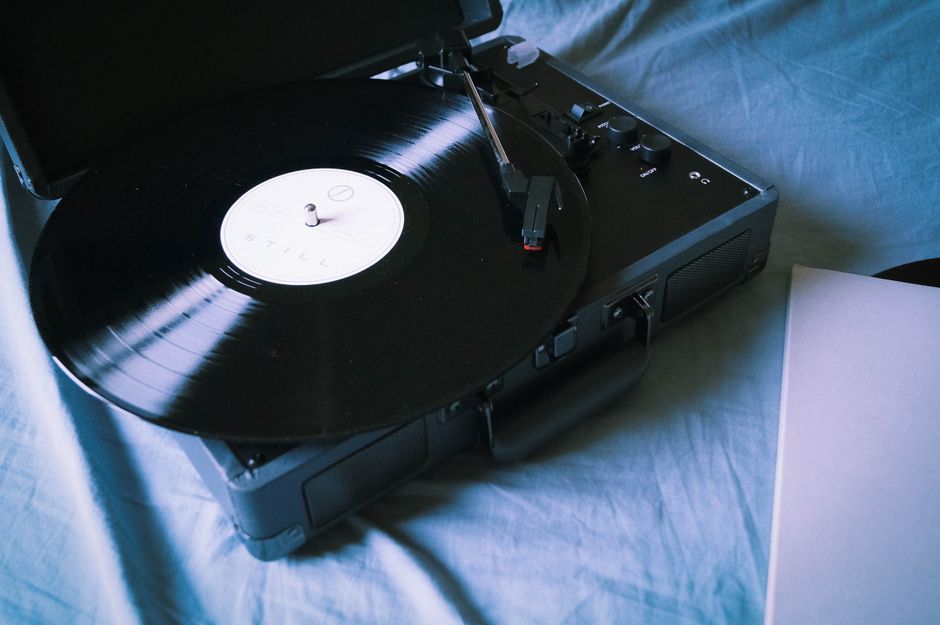
There is a specific sound that a lot of people under thirty have chosen to fall in love with on purpose: the soft crackle before the first track, the mechanical thunk of a tonearm settling into a groove. It is objectively worse than the silent, pristine playback you get from a streaming app. And yet in 2025, Americans bought nearly 47 million vinyl records — a format that predates the transistor, the internet, and roughly everyone buying it.
Meanwhile the compact disc, the shiny miracle that was supposed to make vinyl obsolete forever back in the 1980s, keeps sliding. This isn't nostalgia getting a cute moment in the sun. It's a genuine, sustained shift in how people spend money on music, and it says something interesting about what we actually want from the things we own.
The numbers are not a fluke
Let's start with the scale, because it's easy to assume "vinyl is back" is a headline invented by a few hipsters in a Brooklyn record shop. It isn't. According to the RIAA's year-end report, U.S. vinyl revenue passed $1 billion in 2025 — a level the format hadn't reached since 1983, back when Michael Jackson's Thriller was still selling by the truckload.
Vinyl has now grown for 19 consecutive years in the United States. That's not a spike. That's a trend with a mortgage.
The gap over CDs is what makes it striking. In 2025 vinyl sold roughly 46.8 million units versus 29.5 million CDs, and pulled in more than three times the revenue of CDs. Records grew about 9% year over year while CDs fell — units down around 11.6%, revenue down 7.8%. So this is the second straight year vinyl has clearly outsold its digital-era replacement. The format that was declared dead in 1988 outlived the thing that killed it.
To keep it honest: physical music is still a small slice of the whole pie. The U.S. recorded-music business topped $11.5 billion in 2025, and streaming alone accounted for about $9.5 billion of that. Vinyl is under 10% of the total. But within the world of "things you can hold," it has become the undisputed king.
Why a worse format keeps winning
Here's the puzzle. By any technical measure of convenience, vinyl loses. You can't put it in your pocket. You have to flip it halfway through. It warps, scratches, and skips. A $10 monthly subscription gives you 100 million songs; one record gives you maybe 40 minutes and costs three times as much.
The answer is that people aren't buying vinyl instead of streaming — they're buying it because of streaming. When music became infinite and free-feeling, it also became weightless. Nothing costs anything, so nothing is worth anything in particular. A record reverses that. It's a deliberate purchase, a physical object with cover art you can actually see, liner notes you can read, a thing that sits on a shelf and says this one mattered to me.
Streaming is how most people listen. Vinyl is how a growing number of people collect, and those are not the same emotional job.
There's also the ritual. Putting on a record forces you to sit with one album, in order, the way the artist sequenced it — no shuffle, no skipping to the hit, no algorithm queuing up something else the second it ends. In an attention economy that's engineered to keep you moving, forty uninterrupted minutes with one piece of work has quietly become a small luxury.
There's a generational twist worth noting, too. A large share of new vinyl buyers are young — people who grew up entirely on streaming and have no childhood memory of records at all. For them this isn't a return to anything; it's a discovery. That matters, because a revival powered by nostalgia eventually runs out of nostalgic people, while one powered by new fans finding something they genuinely like can keep going. Nineteen years in, the second explanation looks a lot more plausible than the first.
The economics that make it work
The revival isn't only about feelings; the business math lines up too. For artists, streaming pays fractions of a cent per play, and it can take hundreds of thousands of streams to equal the profit from selling a few hundred records. A vinyl LP that sells for $30 delivers a real margin — and fans, it turns out, are happy to pay it when they love the artist.
This is why nearly every major album release now ships with multiple vinyl variants: different colored pressings, exclusive editions, deluxe versions. Some of that is collector catnip, and yes, it can tip into cynical (limited "exclusives" designed mainly to make you buy the same album twice). But it also funds tours and studio time in a way that a billion streams often can't.
| Format | 2025 U.S. units | Revenue trend | The pitch |
|---|---|---|---|
| Vinyl | ~46.8 million | Up ~9%, past $1B | Ownership, ritual, art object |
| CD | ~29.5 million | Down ~8% | Cheaper, portable-ish, fading |
| Streaming | (subscriptions) | ~$9.5B, dominant | Everything, instantly, for rent |
The table makes the split clear: streaming owns listening, vinyl owns keeping, and the CD is stuck in the awkward middle — not as convenient as a stream, not as satisfying as a record.
So should you actually start?
If any of this has you eyeing a turntable, a little realism helps. You don't need to spend a fortune, but avoid the cheapest all-in-one suitcase players — the ones with a built-in speaker and a flimsy needle. They can wear down your records over time, which defeats the purpose of buying something meant to last. A modest entry setup is a decent belt-drive turntable, a basic amplifier, and a pair of bookshelf speakers. Plenty of people build that for a few hundred dollars, often with used gear.
Start with albums you already love rather than chasing rare pressings. The joy of vinyl isn't audiophile bragging rights (a well-mastered stream can sound fantastic); it's the tactile, one-album-at-a-time experience. Buy the three or four records that mean the most to you and see whether the ritual clicks before you fall down the collecting rabbit hole.
And keep your expectations grounded. Vinyl won't replace your streaming subscription, and it shouldn't. Think of it as the opposite end of the same hobby: streaming for discovery and daily background, records for the handful of albums you want to sit with, own, and hand down.
What the comeback is really about
The vinyl revival is often framed as a war between old and new, analog warmth versus digital cold. That's the fun version, but it misses the point. The real story is about friction as a feature. In a world where music is effortless, a surprising number of people have decided they want a little effort back — something to unwrap, place, flip, and shelve.
That impulse isn't limited to records. It's the same reason physical books survived e-readers, why film photography is booming among people who've never known a world without smartphones, why handwritten letters feel special precisely because they're inconvenient. When everything is instant, the slow thing becomes the meaningful thing.
So no, vinyl didn't come back because it sounds better, and it didn't come back by accident. It came back because it offers the one thing an infinite library can't: the feeling that this particular album, spinning on this particular turntable, is yours. Nineteen years of growth suggests a lot of people found that worth the money — and worth the trouble.
Comments 0