
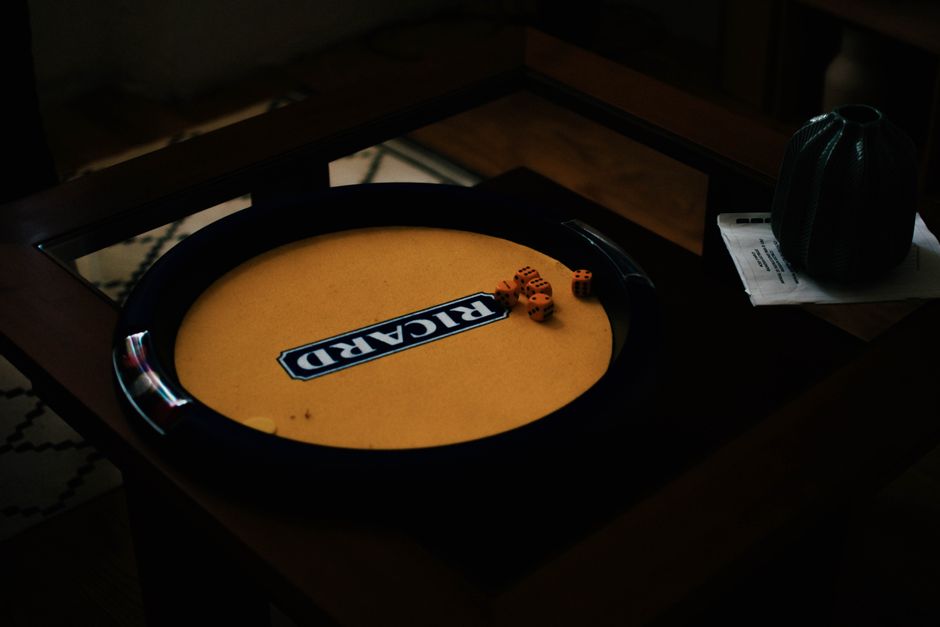
It's a Friday night, and instead of everyone drifting into separate rooms to stare at separate screens, five people are crowded around a kitchen table arguing—cheerfully—about whether to build a settlement or block someone's road. Phones are face-down. Someone is laughing so hard they can't shuffle. This scene is playing out in more homes than you might think, and it's not nostalgia. It's one of the fastest-growing corners of the entertainment industry.
For decades, "board games" meant a dusty box of Monopoly that came out once a year and ended in a family argument. That version still exists, but it's no longer the whole story. The modern tabletop hobby is a sprawling, creative, surprisingly adult world—and it's quietly booming while everyone's attention is pointed at streaming and video games.
The numbers tell a story nobody expected
Here's the part that surprises people: board games are not a shrinking relic. They're a growth category. Industry analysts estimate the global board game market at roughly $15–16 billion in 2025, with projections pushing toward $17 billion or more in 2026—annual growth rates in the high single digits to mid-teens depending on how you slice "tabletop." For a hobby that predates electricity, that's a remarkable trajectory.
Board games are one of the few analog pastimes that are growing because of the digital age, not in spite of it.
Even more telling is who's playing. Estimates put the number of regular players worldwide in the hundreds of millions, and the demographics skew adult—the bulk of players fall in the 18-to-54 range. This isn't a children's toy market anymore. It's grownups spending real money on games designed for grownup brains, and treating game night as a genuine social ritual rather than a rainy-day backup plan.
Why now? Screen fatigue and the hunger for real presence
The obvious question is why. Why would people raised on infinite digital entertainment choose to punch cardboard tokens out of a sheet and read a rulebook? The answer, ironically, is the screens themselves.
After years of remote work, endless scrolling, and video calls that somehow leave you lonelier, a lot of people are starved for presence—the specific feeling of being in a room with other humans, reading their faces, sharing a moment that isn't mediated by a feed. A board game forces that. You can't half-attend to a game of Wingspan while doom-scrolling; the game demands your hands, your eyes, and your attention. That constraint has become the selling point.
There's also a cognitive pull. Analysts consistently cite "demand for cognitive engagement" as a top driver of the market. A good strategy game scratches the same itch as a puzzle, but with a social layer on top. You're thinking hard and trash-talking your best friend. That combination—mental challenge plus human connection—turns out to be something a lot of adults are actively looking for, and screens rarely deliver both at once.
It helps that game night carries none of the pressure of most modern socializing. There's no dress code, no bill to split awkwardly, no forced small talk—the game itself gives everyone something to do and something to talk about. Shy people warm up over a shared objective; a table of near-strangers becomes a team within twenty minutes. For a generation that finds open-ended socializing exhausting, a game provides the perfect scaffolding: structure when you want it, conversation when you don't.
The hobby got dramatically better designed
Part of the boom is simply that the games are better now. The center of gravity in tabletop design shifted years ago from luck-heavy roll-and-move games to elegant systems where your decisions actually matter. Mechanics that hobbyists talk about—area control, worker placement, deck-building, roll-and-write—are just design vocabulary for "games where you make interesting choices instead of rolling a die and hoping."
Modern releases also cover an enormous range of moods and group sizes. A few examples of how varied the landscape has become:
| If you want... | Look for this style |
|---|---|
| A relaxed, thinky evening | Engine-builders like nature or city-building games |
| Teamwork instead of rivalry | Cooperative games where everyone wins or loses together |
| A game just for yourself | Solo modes, one of the fastest-growing segments |
| Quick laughs at a party | Social deduction and word games |
Cooperative and solo play deserve special mention. Cooperative games—where the table works together against the game itself—have exploded because they lower the social stakes; nobody's feelings get hurt, and new players don't get crushed by a veteran. Meanwhile, solo board gaming has become a legitimate category of its own, with games designed specifically for one player and an evening alone. That flexibility means the hobby fits far more lives than the old "you need exactly four people" model ever did.
Crowdfunding rewired how games get made
You can't explain the modern boom without talking about crowdfunding. A large and growing share of notable new games now launch through platforms where designers pitch directly to players and fund production up front. Roughly a third of prominent launches in recent years have been crowdfunding-backed, and that has changed the industry's DNA.
The effect is twofold. First, weird, ambitious, niche ideas that no traditional publisher would risk—a game about deep-sea diving, a legacy campaign that permanently changes across a dozen sessions—can now find their audience directly. Second, players increasingly see themselves as backers and collectors, not just customers. The premium-packaging trend (heavy boxes, sculpted miniatures, beautiful components) rides on this: when you've waited a year for a game you helped fund, unboxing it becomes an event in itself. That emotional investment is rocket fuel for a hobby.
Digital didn't kill it—it fed it
The final twist is that technology, the thing supposedly at war with analog play, has become one of tabletop's biggest allies. Companion apps now handle tedious bookkeeping so the humans can focus on decisions. Hybrid digital-physical games use a phone or tablet to run an adaptive opponent or reveal a branching story. Online platforms let friends in different cities play the same board together on a screen, then buy the physical copy for when they're finally in the same room.
Just as importantly, online communities and streaming turned board gaming into a spectator activity. Watching skilled players explain and play through a game—something that would have sounded absurd a generation ago—introduces millions of people to titles they'd never have found on a shelf. The discovery problem that used to limit the hobby has largely been solved by the same internet that was supposed to replace it.
Local game stores and dedicated board game cafés round out the ecosystem. Rather than being wiped out by online retail, many have reinvented themselves as social hubs—places you pay a small fee to sit, order a coffee, and try dozens of games off the shelf before you ever buy one. They've become the modern equivalent of the neighborhood pub for a certain kind of crowd, and they lower the biggest barrier to entry: the fear of spending money on a game you might not like.
The takeaway: a low-tech answer to a high-tech problem
Strip away the market charts and what's left is simple. In an era of infinite, frictionless, solitary entertainment, a growing number of people are choosing something slower, harder, and shared. Board games ask for the one thing modern life makes scarce—a few uninterrupted hours in the same room as people you like—and in return they hand back a kind of connection that streaming and scrolling never quite manage.
If you've been meaning to try it, the on-ramp has never been gentler: pick a well-reviewed cooperative or gateway game, invite two or three people, and put the phones in a drawer. Worst case, you spend an evening laughing around a table. That's not a bad way to lose a Friday night—and judging by the numbers, a few hundred million people already agree.



Comments 0