
There is a specific moment in a movie theater when the spell breaks. A creature lunges, a building collapses, a hero leaps between rooftops — and instead of gasping, some quiet part of your brain shrugs and thinks, that's not real. You don't always know why. The lighting is perfect, the motion is smooth, the budget was clearly enormous. And yet something in the image feels weightless, like a very expensive cartoon pasted over the actors.
For most of the last two decades, the film industry's answer to that problem was simply more: more computing power, more render time, more digital polish. But lately the pendulum has swung in a direction almost nobody predicted a generation ago. Directors are dragging rubber creatures, full-scale car rigs, and hand-built miniatures back onto their sets. Practical effects — the old craft of making things physically, in front of the camera — are having a genuine renaissance. This is the story of why, and what it tells us about how we actually watch movies.
What "practical effects" really means
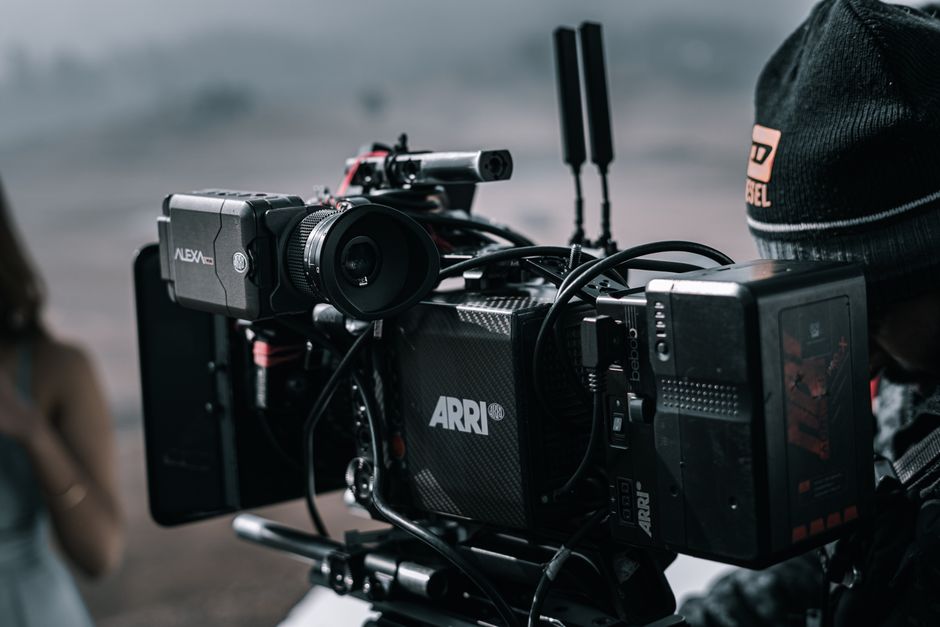
The term covers a surprisingly wide toolkit. Practical effects are anything achieved on set, in-camera, using physical materials rather than a computer. That includes prosthetic makeup and animatronics, foam-latex creatures and puppets, miniature models of cities and spaceships, real pyrotechnics and controlled fire, mechanical rigs that flip cars or collapse walls, and the humble art of forced perspective, where clever placement makes a normal-sized actor look tiny or gigantic.
Practical effects aren't a nostalgia act. They're a set of tools that solve a problem CGI has always struggled with: making the audience believe an object has weight.
It helps to separate practical effects from special effects in general. Computer-generated imagery, or CGI, is also a special effect — it's just created digitally, after filming, by artists working at screens. The two approaches are not enemies by nature. In fact, as we'll see, the smartest productions today treat them as partners. But for a long stretch, roughly from the mid-2000s onward, CGI was winning so decisively that practical work looked like a dying trade. Understanding why it came back means understanding why it nearly disappeared.
Why CGI took over — and where it fell short
The appeal of digital effects was obvious and, honestly, reasonable. A physical creature costs a fortune to build and can only do what its mechanics allow. A digital creature can be anything, do anything, and be revised endlessly in post-production. If a director changes their mind about the color of a monster three months after the shoot, CGI can accommodate that. A latex suit cannot. Studios chasing bigger spectacle on tighter schedules found digital effects irresistibly flexible.
The problem is that flexibility came with a hidden tax, and audiences have slowly learned to feel it. When everything on screen is possible, nothing carries consequences. A purely digital character often moves in ways that no real mass ever could — accelerating too fast, landing too lightly, occupying space without displacing it. Our eyes are extraordinarily good at reading physical cues we can't consciously name: how light wraps around a wet surface, how dust kicks up when something heavy hits the ground, how a face creases when it's actually being pushed by a hand.
There's data pointing in this direction, too. A widely cited YouGov poll found that a clear majority of respondents — around 62% — preferred effects that "looked real, even if a bit imperfect," over flawless but weightless digital illusions. That single number captures the whole shift. Audiences aren't demanding technical perfection. They're demanding believability, and those are not the same thing. A slightly rubbery monster you could have touched on set often beats a photorealistic one that never existed anywhere but a hard drive.
The psychology of a thing that's actually there
To see why this works, watch how actors respond. When a performer reacts to a real animatronic creature snarling inches from their face, their fear has a target. Their eyeline is exact. The flinch is honest, because a large mechanical thing genuinely just moved at them. Compare that to acting against a tennis ball on a stick — a placeholder for a monster to be added later — and the difference is subtle but real. The best actors can sell an empty room, but they shouldn't have to.
The same logic applies to the camera itself. A physical object interacts with real light. It casts real shadows, catches real reflections, and sits inside the scene's actual atmosphere — the haze, the smoke, the dust in the air. Digital objects have to simulate all of that, and simulation is where the uncanny creeps in. This is why so many effects artists now argue that the goal isn't to choose between the two philosophies at all.
The modern best practice isn't practical versus digital. It's practical plus digital — physical builds for texture and weight, computers for the invisible clean-up.
That hybrid approach is the quiet secret behind a lot of effects work you've admired without realizing it. A scene might use a real, full-scale vehicle for the dangerous stunt, then rely on CGI only to erase the safety cables and paint out the crew. A creature might be a practical suit for the close-ups and a digital double for the impossible wide shots. When a physical build anchors the shot, even heavy digital layers blend better, because the camera is capturing something that truly exists as its foundation.
The economics quietly shifted, too
It's tempting to frame the comeback purely as an artistic awakening, but money played a role, and it's worth being honest about that. For years the assumption was that CGI was cheaper and faster. That assumption has frayed. High-end digital effects require armies of skilled artists working long hours, often under brutal deadlines as release dates loom. The cost of truly convincing, photorealistic CGI is enormous, and it tends to arrive late in the process, when there's the least time to fix it.
A well-planned practical effect, by contrast, front-loads its cost. You spend the money in the workshop, before the shoot, building something you can test and refine with your own hands. On the day, it either works or it doesn't — and if it works, it's done. There's no render queue, no endless revision cycle, no last-minute panic to make a digital shot hold up on a giant screen. For certain kinds of scenes, especially grounded action and creature work, the practical route can be the more predictable investment.
None of this means practical effects are always cheaper. A massive city-destruction sequence still belongs to the computers, because you cannot safely or affordably level a real skyline. The point is narrower and more interesting: the old spreadsheet logic that "digital is simply the economical default" no longer holds automatically. Productions are making the choice scene by scene, and increasingly the physical option wins the argument.
What comes next: AI, sustainability, and smarter workshops
The future of the craft is not a retreat into the past — it's the past re-equipped with new tools. Effects workshops are already adopting rapid prototyping and 3D printing to build complex mechanical parts in hours instead of weeks. Designers use AI-assisted tools to iterate on creature concepts and to plan how a practical build will interact with digital enhancements before a single piece of foam is cut. Augmented-reality overlays let a director stand on set and preview roughly how the finished, hybrid shot will look while there's still time to change it.
Sustainability is entering the conversation as well. Traditional effects work leans heavily on foams, resins, and plastics that aren't kind to the environment. Some shops are experimenting with biodegradable and recycled materials, and the industry is slowly asking whether a monster really needs to leave a mountain of landfill behind it. These are early days, and much of it is still speculative, but the direction is promising: a craft that keeps its tactile soul while shedding some of its waste.
If there's a single lesson in all of this, it's that spectacle alone was never what moved us. We go to the movies to believe, for two hours, in something that isn't true — and belief turns out to be a physical, almost animal response. We trust weight. We trust texture. We trust the flicker of a shadow cast by an object that was genuinely there.
The practical effects revival isn't a rejection of technology. It's a correction — a reminder that the most advanced tool in filmmaking is still the human eye watching from the dark, quietly deciding whether to believe. The films that respect that instinct, whether they build their magic from latex or from pixels or from both, are the ones that stay with us. And that, more than any render farm, is what keeps the spell from breaking.

Comments 0