
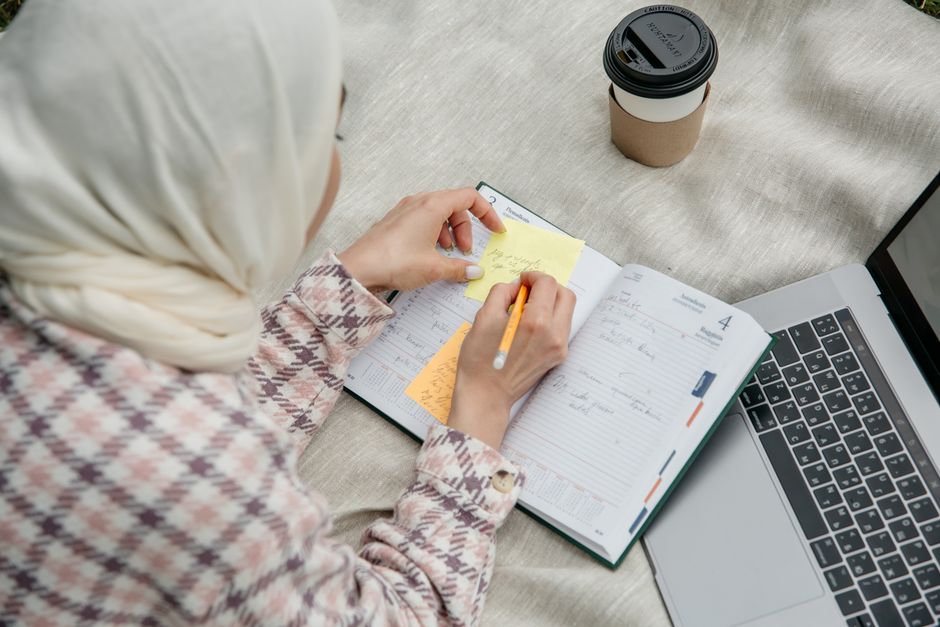
You told yourself this would be the year. The year you finally learned to code, or picked up Spanish, or got comfortable with the guitar gathering dust in the corner. Then work happened, and dinner happened, and the couch happened. By the time you had a free evening, the goal felt so far away that starting seemed almost embarrassing.
Here is the reassuring truth: the problem is almost never talent or age. It is method. Most adults try to learn the way they remember learning in school — long, passive sessions, cramming, hoping it sticks — and that approach is spectacularly badly suited to a busy life. With a few changes to how you practice, you can make real progress on ten or fifteen honest minutes a day.
Start Absurdly Small (Smaller Than Feels Serious)
The single biggest reason skill projects die is that we design them for a version of ourselves who has two free hours and boundless willpower. That person shows up roughly never. So the plan collapses on the first busy Tuesday, and one missed day quietly becomes ten.
The fix is to shrink the daily commitment until it feels almost too easy. Not "practice guitar for an hour," but "play one chord change five times." Not "study Spanish," but "review ten words." The goal at the start is not volume — it is building the identity of someone who shows up. A tiny action you actually do beats an ambitious one you skip.
Consistency compounds; intensity burns out. Ten minutes every day for a month will always beat one heroic three-hour session you never repeat.
Once the habit is stable, it grows on its own. People who commit to "just ten minutes" almost always end up doing more on the days they have energy — but crucially, on the bad days, ten minutes still counts as a win. You keep the streak, and the streak is what carries you.
Practice Actively, Not Passively
Rewatching a tutorial, rereading your notes, listening to the same lesson again — these feel productive because they are comfortable and the material starts to seem familiar. But familiarity is not the same as ability. Recognizing the answer when you see it is a much weaker skill than producing it from a blank page.
The research on this is remarkably consistent: retrieval — pulling information out of your head — builds durable memory far better than review does. So close the book and try to explain the concept out loud. Write the code before you look at the solution. Say the sentence in the new language before you check the phrasebook. The little struggle you feel when you can't quite remember is not failure; it is the exact moment learning happens.
A simple test: if your practice never makes you slightly uncomfortable, you are probably reviewing, not learning. Build in moments where you have to perform without a safety net, then check yourself afterward.
Space It Out and Let Yourself Forget a Little
There is a strange, well-documented quirk in how memory works: you remember things better when you review them just as you're starting to forget them. Cramming five lessons into one Sunday feels efficient, but most of it evaporates by Wednesday. The same five sessions spread across two weeks stick dramatically better.
This is why daily beats weekly, and why apps that use spaced repetition — flashcard tools like Anki, or the review systems baked into language apps — are so effective. They quietly schedule each item to come back right around the edge of forgetting. You don't have to use software to get the benefit, though. Simply revisiting yesterday's material for two minutes before starting today's is a powerful, free version of the same idea.
| Approach | Feels like | Actually delivers |
|---|---|---|
| Cramming one long session | Fast progress | Rapid forgetting |
| Passive rereading | Comfortable mastery | Weak recall |
| Short daily retrieval, spaced | Slow and effortful | Durable skill |
The lesson of the table is a little humbling: the methods that feel best are usually the ones that work worst. Trust the effort, not the comfort.
Aim at Real Things, Fast
Nothing kills motivation like practicing in a vacuum. If every session is drills with no destination, your brain quietly concludes the whole project is pointless. The antidote is to connect the skill to something real and slightly public as early as possible.
Learning to code? Build a tiny tool that solves an annoyance in your own life — a script that renames your photos, a page that tracks your runs. Learning a language? Change your coffee order, message a friend who speaks it, watch a show with subtitles in that language instead of yours. Learning an instrument? Pick one song you actually love and work toward playing thirty seconds of it. A concrete, personal target turns abstract practice into something you want to get back to.
These small projects also teach you what you don't yet know in a way no curriculum can. You'll hit a wall, look up exactly the thing you need, and remember it far better because you needed it in the moment rather than in the abstract.
Protect the Habit From Real Life
Motivation is a fair-weather friend. It shows up when you're excited and vanishes the moment you're tired, stressed, or bored — which is precisely when you need to practice most. So instead of relying on feeling motivated, design your environment so the right action is the easy one.
Attach the new habit to something you already do without fail. Practice vocabulary while the coffee brews. Do your coding kata right after you close your laptop for work. Keep the guitar on a stand in the living room, not in a case in the closet, because the ten seconds it takes to unzip a case is enough friction to talk yourself out of it. Make starting nearly frictionless and make quitting slightly annoying.
And forgive the missed days in advance. You will miss some — a sick kid, a brutal week, a vacation. The people who succeed are not the ones with perfect streaks; they are the ones who treat a missed day as a single event, not a verdict on their character, and simply start again the next morning. Never miss twice in a row, and you're most of the way there.
The Long, Quiet Payoff
Here is the part nobody tells you: the progress feels invisible day to day and then suddenly obvious. For weeks it seems like nothing is happening. Then one afternoon you understand a sentence without translating it, or you play the chord change without looking, or you write the function without googling — and you realize the small deposits added up while you weren't watching.
You don't need more time, more talent, or a dramatic life overhaul. You need a target you care about, a few honest minutes a day, practice that makes you slightly uncomfortable, and enough patience to let it compound. Pick one skill, shrink the first step until it's almost laughable, and do it today. Future you — the one who can finally do the thing — is built entirely out of small, unremarkable evenings like this one.



Comments 0