
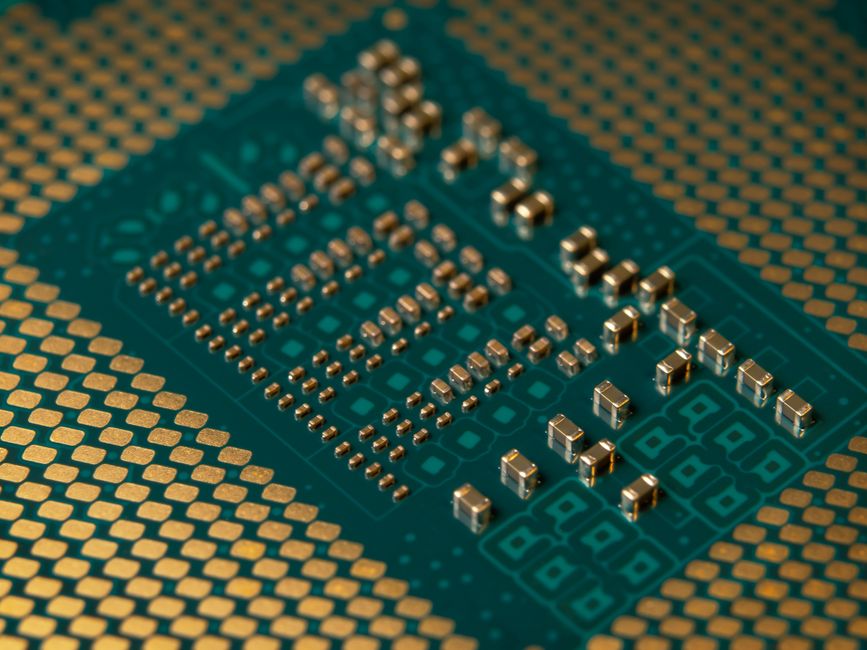
Seoul's chip trade did it again. The KOSPI closed up 3.56% at 6,813.34 on Thursday, a fourth straight advance, as foreign investors kept pouring money into Samsung Electronics and SK Hynix on the back of an overnight AI-led rally on Wall Street. It was the kind of session that has defined Korean equities this month: heavy foreign buying, semiconductors doing almost all the lifting, and a market that keeps grinding to fresh highs even as the rest of the tape stays mixed.
The short version: The KOSPI rose 3.56% to 6,813.34 for a fourth day running, driven almost entirely by chipmakers. Foreigners bought a net 2.1 trillion won, Samsung and SK Hynix both jumped roughly 5%, and the won held near a ten-month high around 1,415 per dollar.
| Instrument | Close | Change |
|---|---|---|
| KOSPI | 6,813.34 | +3.56% |
| KOSDAQ | 861.37 | +0.29% |
| KRW/USD | ~1,415 | little changed |
| Samsung Electronics | ₩268,000 | +4.89% |
| SK Hynix | ₩1,590,000 | +5.91% |
What moved the market
The story begins in New York. Overnight, US indexes edged toward records after a batch of AI-linked companies posted stronger spring growth than analysts expected, and a July inflation report came in slightly softer. The S&P 500 rose 0.3% to 7,748.50, the Nasdaq added 0.5% to 26,588.49, and July CPI printed at 0.1% month over month, with the annual headline rate easing to 3.4%. For Seoul, the relevant signal was the tech complex: when AI and chip names run in the US, Korea's two semiconductor giants tend to open sharply higher, and they did.
The flows tell the rest. Foreign investors bought a net 2.1 trillion won of KOSPI shares and extended their buying streak to a fourth session, with cumulative purchases topping 2 trillion won. Institutions added a net 680 billion won. On the other side, retail investors sold a net 2.72 trillion won, locking in gains after a fast run. That split — foreigners and institutions accumulating while domestic retail takes profit — has been the defining pattern of the rally, and it is why the index keeps climbing even on days when local sentiment feels cautious.
Underneath the headline number, the market also looked calmer than it did a few weeks ago. Traders noted that the leverage unwinding that whipsawed the index through the summer appears to be winding down, and intraday volatility has fallen sharply from the extremes seen last month. A steadier tape makes it easier for foreign money to stay committed.
Sector by sector
This was a semiconductor day, full stop. Samsung Electronics rose 4.89% to 268,000 won and SK Hynix jumped 5.91% to 1.59 million won, both stretching winning streaks to three sessions. The strength radiated out to chip materials, parts and equipment names, which piggybacked on the majors. Recent trade data added fuel: Korea's semiconductor exports have been running exceptionally hot, with one recent reading showing chip shipments up more than 150% year over year, underscoring how central memory demand — much of it AI-driven — has become to the whole export machine.
The concentration cuts both ways. The KOSDAQ, home to smaller-cap and growth names, barely moved, adding just 0.29% to 861.37. When gains are this narrowly sourced in a handful of large-cap chip stocks, the broader market can look flat even as the index sets records. Autos, shipbuilding, batteries, defense and biotech were along for the ride at best; none of them was the story. For anyone watching breadth, that narrowness is worth keeping in mind — a rally leaning this hard on two tickers is powerful but not diversified.
The won and the macro picture
The won held its ground, trading around 1,415 per dollar and staying close to a more than ten-month high reached last week. Persistent dollar-selling flows — a natural byproduct of foreigners converting cash to buy Korean equities — have kept the currency firm, even as broad dollar moves and a weak yen pull in the other direction. A stronger won is a double-edged sword for Korea: it lifts the value of foreign inflows and eases import costs, but it can pressure the price competitiveness of the exporters that power the economy.
On policy, the backdrop is unusual. The Bank of Korea raised its policy rate to 2.75% in July, its first hike in more than three years, and a deputy governor signaled this week that further tightening cannot be ruled out if inflation risks persist. That is a hawkish tilt at a time when much of the developed world is cutting, and it helps explain the won's resilience. Higher-for-longer rates support the currency but add a headwind for domestic demand — a tension that will shape how sustainable this equity rally proves to be.
What to watch next
The immediate question is whether the chip trade can broaden. A market up nearly 4% in a session on two stocks is exciting, but durable rallies eventually need participation from autos, financials and the KOSDAQ. Watch whether foreign buying continues at this pace — the streak is the engine, and any reversal would matter quickly.
Beyond that, the calendar points to a few catalysts: further US tech earnings and data that set the tone for Samsung and SK Hynix each morning, upcoming Korean export figures that will confirm whether the semiconductor surge is holding, and the Bank of Korea's policy path after its July hike. Any hint on the direction of the next rate move — and on how the BOK reads the firm won — could swing both equities and the currency.
For now, Seoul closes the week's stretch on a high note: a record-setting index, a firm currency, and foreign money that keeps showing up. The concentration risk is real, but so is the momentum.
This is market information, not investment advice.
Comments 0