
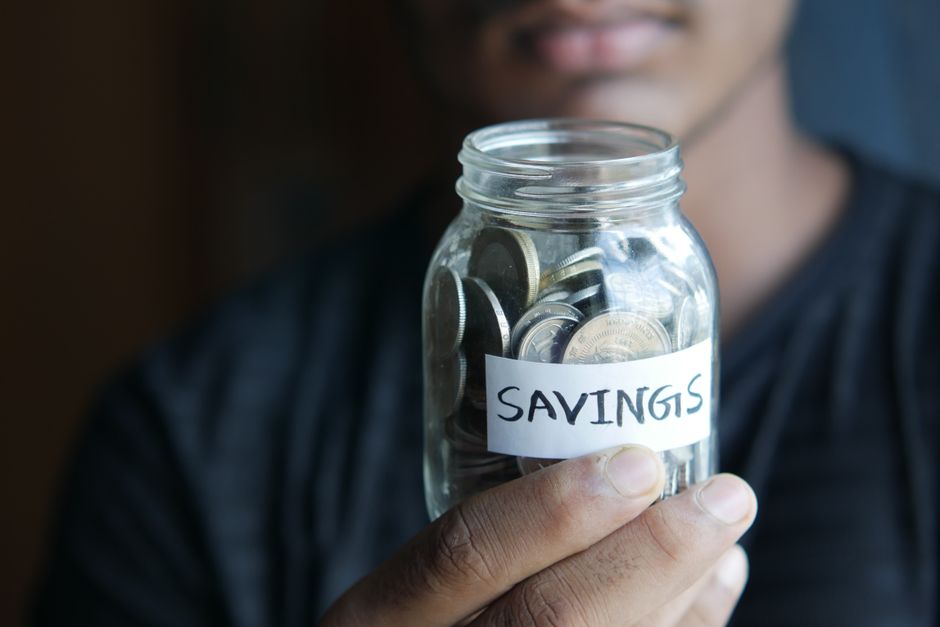
The dishwasher dies on a Tuesday. Then, before you've even priced a replacement, the car makes a noise you've never heard before and the mechanic says the word "transmission." Nothing catastrophic happened — no job loss, no hospital stay — just ordinary life arriving in threes. And yet, for a lot of households, two unlucky weeks like that turn into a credit-card balance that takes a year to pay off.
That gap between "annoying" and "financial crisis" is exactly what an emergency fund is for. It's the least glamorous thing in personal finance — no compounding magic, no ticker symbols — and it might be the single most useful. Let's talk about how much you actually need in 2026, where to keep it, and how to build it without white-knuckling your budget.
What an emergency fund actually protects
An emergency fund is a pot of cash set aside for genuine surprises: a job loss, an urgent medical bill, a car repair you can't skip, a leaking roof. The point isn't to grow the money. The point is that it's there, in full, on the worst day — no selling investments at a loss, no cash advance, no borrowing from a relative.
Here's the mental shift that makes it click: an emergency fund isn't really a savings goal, it's insurance you pay yourself. Think of the interest you earn as a small bonus, not the reason you're doing it. The real return is what you don't pay — the 24% credit-card interest you avoid, the retirement account you don't raid, the panic you don't feel.
An emergency fund's job is to be boring. Boring is the whole product.
One clarifying test: if the expense is predictable, it isn't an emergency. Car insurance renews every year — that's a planned cost, not a surprise. Holidays happen on the same date annually. Reserve the emergency fund for things you genuinely couldn't see coming, and use separate "sinking funds" for the predictable-but-irregular stuff.
How much is enough in 2026
The classic rule of thumb is three to six months of essential expenses, and it's still a fine starting point. But the honest 2026 answer is that the right number depends heavily on how stable your income is. Most guidance now lands in a wider range — roughly four to nine months — and here's how to place yourself in it.
If your income is very stable — a tenured role, a union position, or a dual-income household where both jobs are secure — four to five months is reasonable. If you're in a typical corporate, healthcare, education, or skilled-trades job, aim for around six months. And if your income is variable or higher-risk — freelancers, contractors, commission earners, single-income households, or anyone at an early-stage startup — target eight to nine months, because when your income wobbles, your safety net has to be deeper.
The most important word in all of this is essential. You're covering rent or mortgage, utilities, groceries, insurance premiums, transportation, and minimum debt payments — the things that keep the lights on and the roof overhead. You are not budgeting for dining out, streaming subscriptions, or vacations. That distinction matters: for many people, essential expenses are 30–40% lower than total spending, which makes the target far less intimidating.
| Your situation | Suggested cushion |
|---|---|
| Very stable (tenured, union, secure dual income) | 4–5 months |
| Typical stable job (corporate, healthcare, trades) | ~6 months |
| Variable or higher-risk income (freelance, commission, startup) | 8–9 months |
Run the math on your essentials, not the average household's. If your must-pay monthly costs are $2,800, a six-month fund is about $16,800 — a real number, but a reachable one when you break it into monthly pieces.
Where to keep it (this part matters more than people think)
The emergency fund has two non-negotiable requirements: you can get to it fast, and it won't lose value while it waits. That immediately rules out a few tempting options. It shouldn't sit in the stock market, because the moment you most need cash — a recession, a layoff wave — is often exactly when the market is down and you'd be forced to sell low. And it shouldn't be locked in anything with penalties for early access.
For most people in 2026, the right home is a high-yield savings account (HYSA). These are FDIC-insured, let you transfer money to your checking account in a day or two, and — the part people overlook — actually pay you something to wait. In mid-2026, top HYSA rates hovered around 4% APY, while the national savings average sat near 0.6%. On a $16,000 fund, that difference is roughly $540 a year versus about $100. Same safety, same access, wildly different reward for a five-minute account setup.
Keeping your emergency fund in a regular big-bank savings account is like parking a car with the handbrake on. It works, but you're leaving real money on the table.
A useful structure is a two-tier setup: keep one month of expenses in your checking or a linked savings account for instant access, and the remaining months in the HYSA. You get same-day money for a burst pipe and a slightly better yield on the bulk of the fund. If you want to get slightly fancier, a money-market fund or short-term Treasury bills can work for the deeper layers — but for most households, a single HYSA is more than good enough, and simplicity is a feature.
How to build it without feeling broke
The number can look daunting, so shrink the first target. Your very first milestone isn't six months — it's $1,000, or one month of essentials, whichever comes first. That starter cushion alone absorbs the majority of everyday emergencies (most car repairs and appliance replacements land under four figures), and hitting it quickly gives you the momentum to keep going.
The single most effective tactic is to automate a transfer the day after payday. Even $50 or $100 a week, moved automatically into the HYSA before you can spend it, builds a real fund over a year without requiring willpower each time. Automation beats motivation, because motivation fades and standing orders don't. Treat the transfer like a bill you owe to your future self.
After that, feed it with money you weren't counting on. Route a tax refund, a work bonus, a birthday gift, or the proceeds from selling stuff you don't use straight into the fund. Here's a simple way to think about the first few months of essentials as a milestone ladder:
Milestone ladder
[ ] Tier 0: $1,000 starter        <- covers most single emergencies
[ ] Tier 1: 1 month of essentials <- absorbs a bad week
[ ] Tier 2: 3 months              <- the classic floor
[ ] Tier 3: your target (4-9 mo)  <- full cushion for your risk level
One caution: if you're carrying high-interest debt, don't sprint all the way to a full six-month fund first. Build the $1,000 starter, then attack the debt aggressively, then come back and finish the fund. Paying 22% interest to hoard cash earning 4% is a losing trade — the starter cushion keeps a small emergency from adding to the debt while you knock the balance down.
When you use it — and how to refill
Using the fund is not a failure. That's a mindset trap worth naming out loud: people build a cushion, then feel guilty spending it, and reach for a credit card instead to "keep the savings intact." That defeats the entire purpose. If the water heater floods the basement, this is the money's job. Spend it.
The discipline is in the refill. Once the emergency passes, restart your automatic transfers — ideally at a slightly higher amount for a while — until the fund is whole again. Treat rebuilding as the top budget priority above discretionary spending until you're back to your target. Some people rename their account something like "Do Not Touch — Except Real Emergencies" purely to add a half-second of friction before a non-emergency withdrawal. Small psychological nudges genuinely help.
It's also worth revisiting the target once a year. Rent goes up, a baby arrives, you switch to freelancing — any of these changes your monthly essentials or your income stability, and the fund should move with them. A number that was right in 2024 might be undersized today.
The quiet payoff
None of this is exciting. An emergency fund won't show up in a "how I got rich" story, and it will never beat the market, because beating the market isn't its job. Its job is to make sure that a dead dishwasher, a bad transmission, and a surprise medical bill in the same month stay classified as annoying rather than ruinous.
Start with the starter fund. Automate a transfer you barely notice. Park it in a high-yield savings account so it earns its keep while it waits. Then let it sit there being boring — which, on the day you finally need it, will feel a lot like relief.
Your future self, staring at an unexpected repair bill with zero panic, will thank you.
This article is general information, not personalized financial advice. Rates and figures are approximate and as of writing; check current terms with providers, and consider speaking with a qualified professional about your own situation.


Comments 0